Fermentation processes and strains
Processes are matched to strain metabolism for high acid-production and conversion rates. Production strains are developed for amino-acid processes.
Amino-Acid Fermentation
Lysine products include feed-grade 98 lysine hydrochloride, 70 and 80 lysine grades, and lysine sulfate technology.
The amino-acid industry faces intense competition and higher entry barriers, with innovation, new technologies and processes, environmental protection, and energy/emission reduction as development priorities for feed amino acids. Products include 98, 80 and 70 lysine grades, lysine sulfate, threonine and specialty amino acids.
98, 80 and 70 are lysine product grades. The route includes recovery of mother liquor, ammonia water and ion-exchange side streams.
Processes are matched to strain metabolism for high acid-production and conversion rates. Production strains are developed for amino-acid processes.
Short process routes and reduced investment, targeting high capacity and yield while reducing water, electricity and steam consumption.
Centralized DCS control integrates processes and automation, reducing manual intervention and labor requirements while supporting stable production and quality control.
Senior engineers carry out installation, commissioning, production training and management support. Within applicable national standards, the service aims for an improved plant environment, user-friendly operation and achievement of design capacity and performance.
Typical KORN process figures and technical advantages. Final parameters are subject to project design and the technical agreement.
Original bilingual process diagram from the company brochure. All labels and connections are preserved. Translated text outside the diagram is a reading aid.
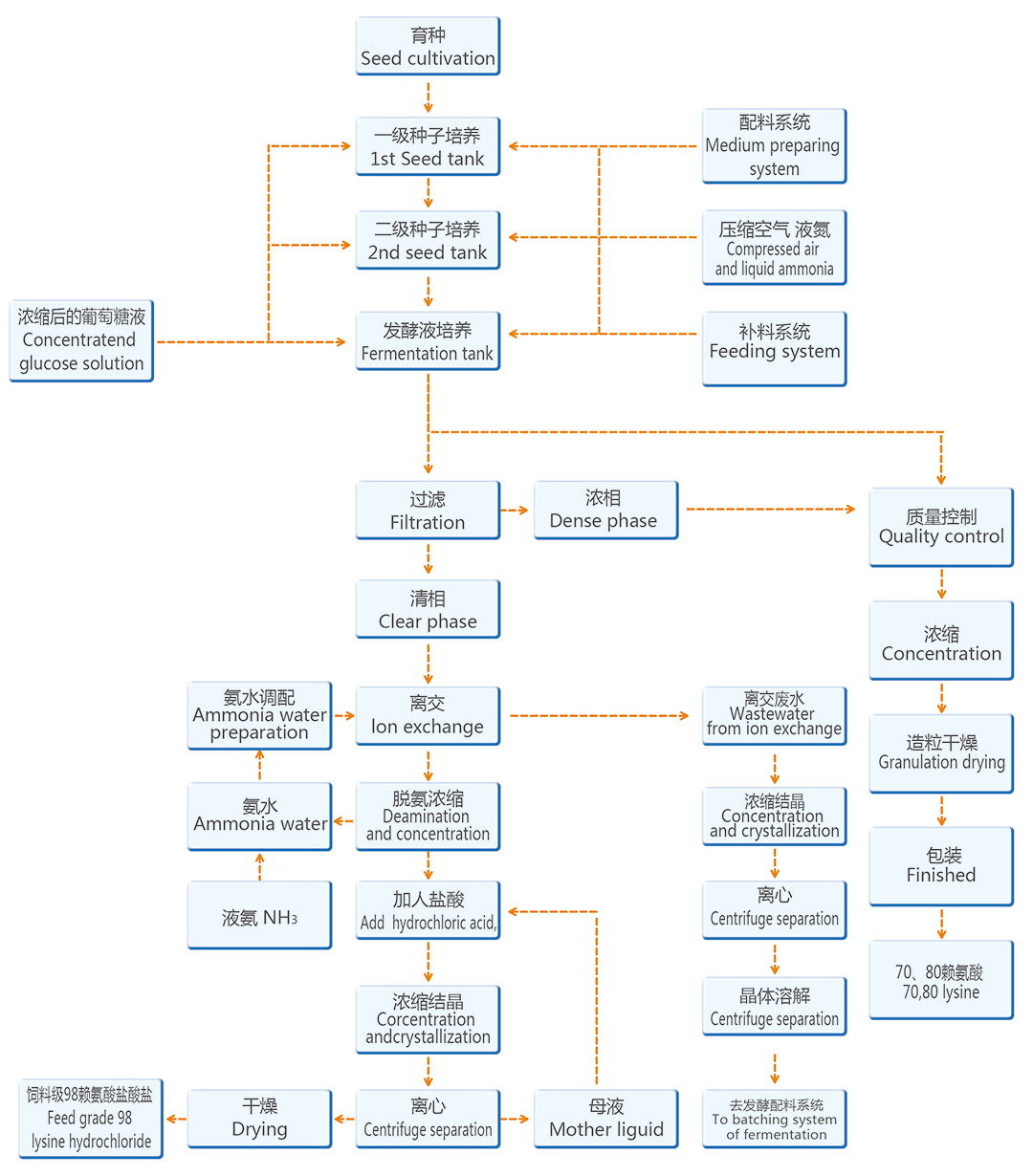
Supporting inputs: concentrated glucose solution, medium preparation, compressed air and liquid ammonia, and feeding system.
Centrifuge mother liquor returns to the hydrochloric acid addition stage.
Ammonia water recovered during deamination/concentration returns to preparation.
Tell us about your raw material, target product, planned capacity and project location.
Project inquiry